For LPs, GPs and Wealth Managers
Custom secondaries and credit solutions for private markets
Tangible combines institutional advisory, an established capital network and proprietary technology to design and execute liquidity solutions across private market portfolios.
Price Discovery
Tangible provides pricing insights and possible secondary scenarios by thinking and acting like a secondary buyer.
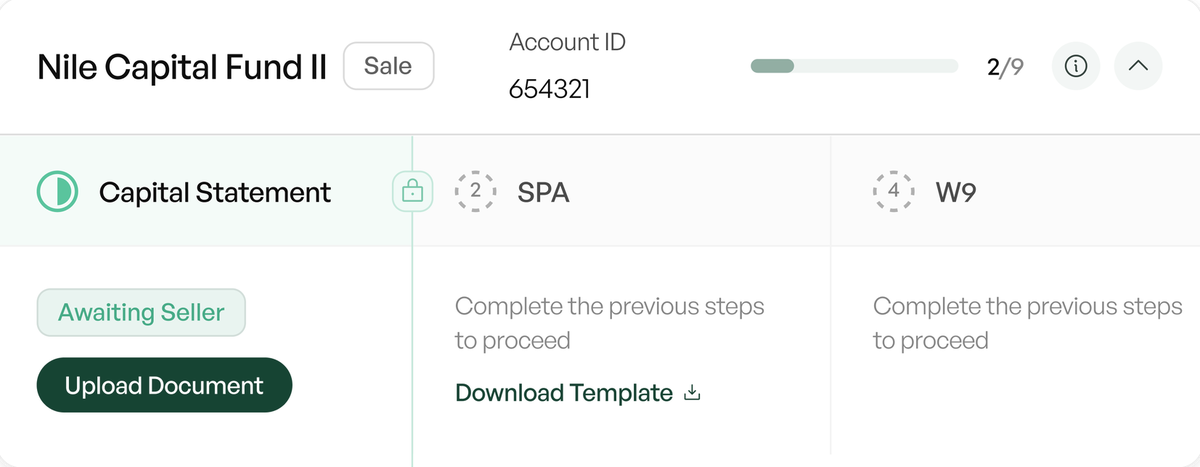
Liquidity Solutions
Case Studies
How yearly rebalancing can make a Fund of Funds stand out
Active portfolio management for higher returns and higher IRR
Returning money to investors faster
Funds of Funds with multiple vintages will always have positions nearing the end of their life, and others that no longer make sense in relation to the strategy, which can be recycled into new opportunities.
The question is how to manage the portfolio efficiently: knowing when to buy and sell to maximize outcomes and deliver for investors.
Sell the tail-end portfolio
Rather than extending the life of a fund nearing its end, the Fund of Funds can sell the tail-end portfolio on the secondary market. This accelerates DPI and may increase IRR. As liquidity options expand, having a clear plan for managing older or non-core positions is becoming more important.
Active portfolio management
Funds of Funds and LPs who see themselves as active managers of their LP stakes should be monitoring secondary market pricing — selling where market NAV is higher than their internal marks, and buying where a preferred GP looks mispriced or dislocated. Furthermore, the market for buying seasoned primaries is growing, making this another opportunity for a Fund of Funds to build its portfolio.
Working with Tangible to improve outcomes and efficiency
Technology built on real auction data
Tangible uniquely combines technology and deep private markets expertise to bring transparency, efficiency and simplicity to secondary transactions. Our proprietary technology, built on pricing data from the hundreds of positions we take to market, lets Funds of Funds monitor market sentiment pricing and run rebalancing scenarios to help decide whether to sell or hold, based on dynamic pricing information.
Monitor market sentiment
For private market investments.
Run rebalancing scenarios
On any fund, large or small.
Track auctions
With transparency and clear reporting.
We work with one of our clients every year to analyze what funds are priced at, and how positions are likely to trade to allow them to decide what to sell and what to buy, at the right time. This annual process enables them to become a more efficient active manager, resulting in money returned to investors faster, usually combined with an uplift in IRR.
Product spotlight
Seller Return Analysis
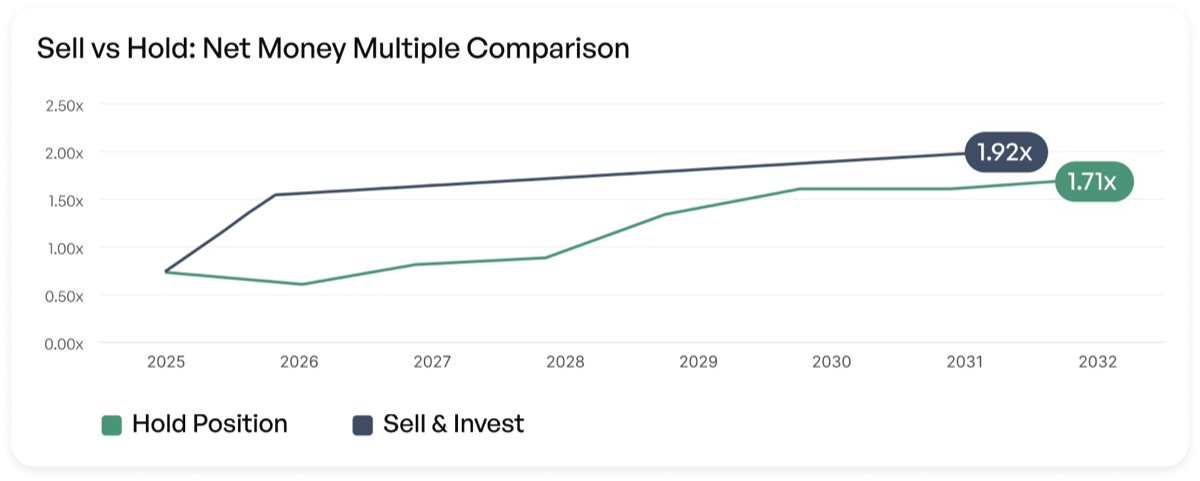
Sell vs Hold: data-driven decision-making support
Leveraging Tangible’s privileged window into seller and buyer behavior, we provide insight into how positions are likely to trade — so you can make an informed, data-driven decision on whether to hold or sell.
- Run and compareMultiple risk-free hold vs sell scenarios.
- Share the resultsWith other decision makers, through clear and exportable reporting.
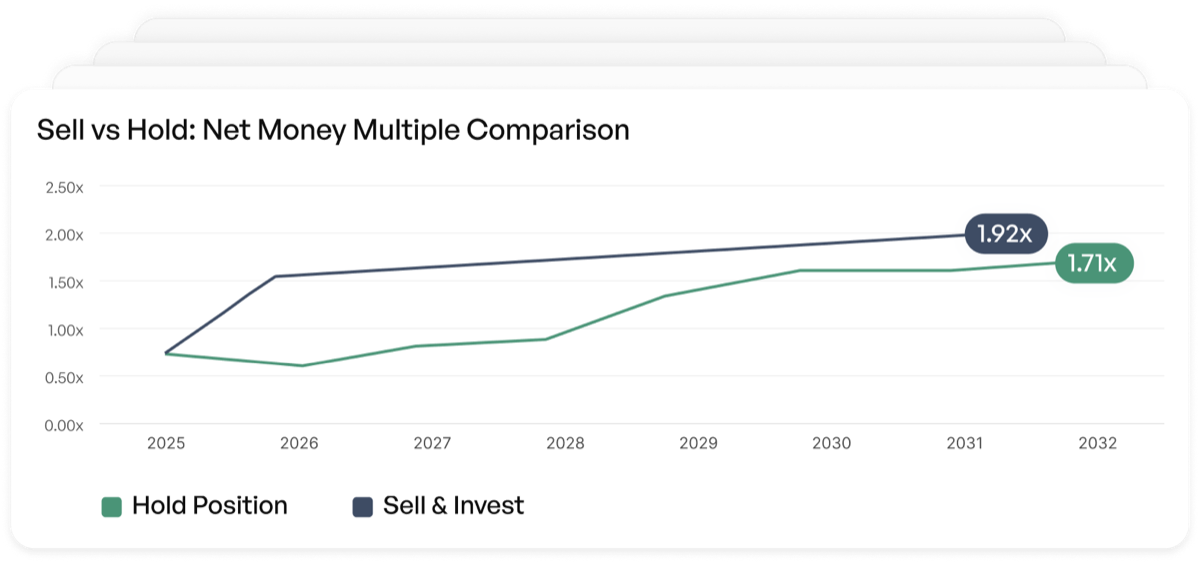
Illustrative example: Sell vs Hold analysis screen
Find out more about building an annual rebalancing program to improve outcomes.
Continuation Vehicles made simple
How GPs can access liquidity while minimising cost and execution risk
A continuation vehicle lets a GP keep managing high-conviction assets beyond the life of the fund, while existing LPs choose to sell or roll. Tangible structures single- and multi-asset CVs, with plug-and-play entity creation and administration, and runs the process from pre-marketing to closing.
The full guide — market context, pros and cons, what makes a strong candidate, the six-step process and Tangible’s role — is on the Continuation Vehicles page.
Find out more about how a CV can help provide liquidity, contact us now:
How technology can help LPs maximize outcomes and efficiency
Active portfolio management for higher returns
We have LP clients who use our free portfolio monitoring service to monitor around 700 of their funds in the same place, increasing efficiency and helping them make better decisions.
The full LP-Led Advisory service — why LPs sell, market context, tools and the seller dashboard — is on the LP-Led Advisory page.
To find out more about how our tools can help to maximize outcomes and efficiency, contact us now:
From accidental alternatives to active management
How family offices can reshape their private markets exposure
Why family offices sell
Family offices can seek exits for a variety of reasons
Accidental alternatives
Where the family office has made commitments to managers that are often small, and where the investment did not pan out. As they grow and focus their asset allocation, some of those positions no longer make sense.
Over-exposure to trending themes
Family offices, like all of us, can be caught up in the enthusiasm of sector darlings when the market becomes a bit frothy. This can lead to unintended over-exposure to areas such as venture and growth from the zero-interest-rate era.
Large positions in pre-AI companies
There may be large VC exposure to pre-AI companies, where the marks may suffer from market sentiment. Research shows a drop in the pricing of these funds on the secondary market, which may erode further.
Locking-in value pre-IPO
Family offices have been able to invest in funds and pre-IPO names that have since increased in value and are approaching an IPO, examples such as SpaceX. However, post-IPO prices may be too volatile, so locking in a return now can be the preferred option.
Changing banks
If they are leaving a wealth manager and have alternatives held there that they need to transition.
Alpha Generation
With some family offices opting to go direct, they may look at the portfolio and an outperforming direct or fund sleeve, and want to overweight that strategy from elsewhere in the portfolio leading to an exit.
Active portfolio management is growing
Family offices who consider themselves active managers of their own stakes, should be monitoring secondary market pricing: selling where market NAV is higher than their internal marks.
Working with Tangible to improve your outcomes and efficiency
Transparency for opaque markets
Tangible combines technology and deep private markets expertise to bring transparency, efficiency and simplicity to secondary transactions. We have over 200 already approved and vetted buyers, which speeds up transactions and reduces legal costs.
We bring transparency to opaque markets with our searchable pricing database that combines industry benchmarking data with insights from our buyer network, to offer LPs market sentiment and pricing guidance to help determine whether to sell or hold by analyzing opportunity cost as well as the discount.
Additional benefits include quarterly auctions, which means your deal gets maximum visibility. The objective is to find the optimal market-clearing price whether selling or buying into new opportunities.
We work on hundreds of small tickets, which gives us data that no one else has. We are a liquidity provider for private markets stakes ranging in size from <$1m to $500m+
To find out more about how we can help to maximize outcomes and efficiency, contact us now:
From inherited complexity to optimized portfolios
Turning legacy books and aging feeder structures into better outcomes
Two cases
Recurring challenges that MFOs and RIAs can face
Case 1
Incoming clients, legacy allocations
A client transfers in from another wealth manager, or arrives with legacy positions, but the asset allocation is not a fit for the new portfolio strategy. A similar situation can occur when a new CIO or Head of Private Markets/Equity joins and wants to overhaul or strategize the portfolio.
Case 2
Feeder funds past their useful life
A feeder is tail-end, or no longer justifies its place on the platform, and the firm must decide how to unwind or streamline it. If the MFO/RIA runs an internal Fund of Funds with positions nearing the end of their life and the tail-end can be sold to close out the vintage.
Case 1
An incoming client’s allocation doesn’t make sense
When a client transitions in from another MFO, or brings legacy alternatives that no longer fit their goals, the exposure and asset allocation needs to be adjusted. Tangible runs a competitive process across two rounds to maximize pricing and offers three options:
NAV loan
A lender advances a loan secured against the NAV of the fund’s portfolio. Proceeds provide fund-level liquidity without requiring an asset sale. Accumulator retains full ownership throughout.
Sale
The position is sold to a vetted secondary buyer at the best price the process can achieve, freeing up capital.
Preferred Equity
A preferred equity provider funds a new GP-controlled vehicle holding selected assets. Proceeds support LP distributions or portfolio needs.
Case 2
What to do with a tail-end or sub-scale feeder
When a feeder is tail-end, or simply no longer earns its place on the platform, there are two ways to handle it:
- Tail-end feeder liquidationThe feeder is wound up and the underlying LP stake in the master fund is sold to a secondary buyer.
- Tender offerBuyers acquire interests from the investors who want out, and the feeder continues to exist, so the AUM and custody of the assets are maintained.
Legacy portfolio solutions
Tangible supports wealth managers and distributors by advising on the optimal liquidity options for tail-end and legacy feeders. Tangible has worked on vintages as old as 2008 and on positions with residual NAV <$100,000.
Working with Tangible to find the right liquidity options
The full spectrum of liquidity solutions
Tangible is a liquidity provider for the private markets ecosystem. We cater to positions with sizes ranging from <$1m to $500m+ and provide the full spectrum of liquidity solutions, from auctions for single lines and portfolio auctions and mosaic sales to NAV lending solutions and tail-end feeder liquidations.
Tangible’s unique process narrows the bid-ask spread. This leads to a >90% success rate on our platform.
Pre-auction phase
Pricing, access and expectations
Auction
Two rounds, four weeks
Closing and settlement
On-platform, through escrow
For NAV lending and preferred equity solutions, we offer a white-glove capital markets team that works to deliver NAV loans for your current or future fund and obtain subscription lines and other lending products to improve returns, which allows LPs to obtain liquidity and retain the upside.
To find out more about how we can help to find the right liquidity solution, contact us now:
Our team evaluates each case and finds the right route to liquidity.
Client control
The client makes the decisions. Tangible manages the process.